
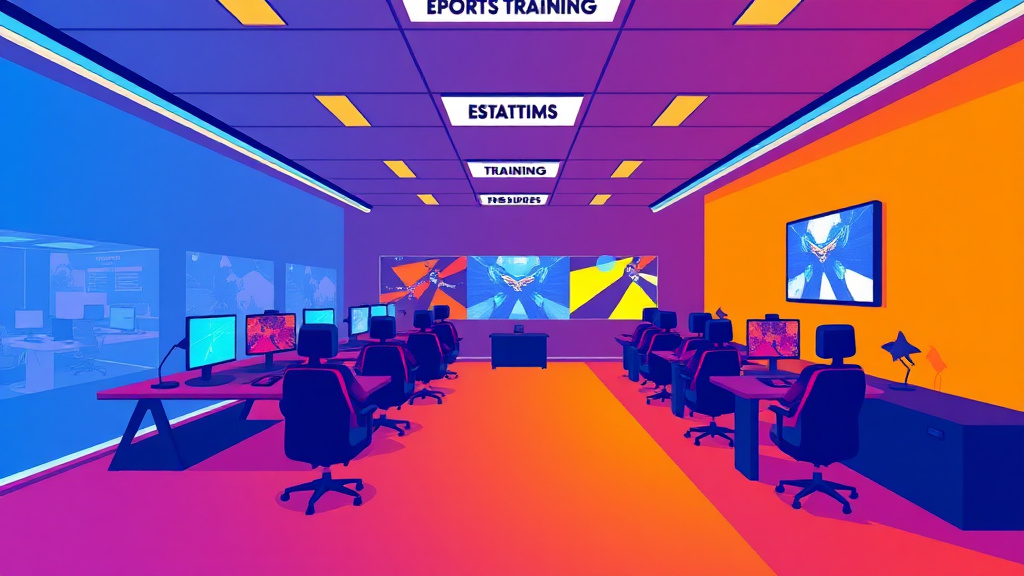
The esports industry has experienced a major shift, moving from basement competitions to a billion-dollar sector. Modern esports organizations are far from being scrappy underdogs—they’re sophisticated operations committing substantial resources to cutting-edge training facilities, expert coaching teams, and sports science programs. This article explores the ways leading esports teams are mirroring traditional sports models, investigating the cutting-edge infrastructure and professional guidance that separate championship-winning teams from competitors, and how these expenditures reveals about esports’ acceptance in mainstream culture.
The Growth of Esports Foundation
The esports landscape has evolved significantly over the previous decade, shifting from informal gaming sessions in basements to professionally structured organizations running premier training venues. Early esports teams functioned with basic infrastructure, utilizing players’ individual equipment and improvised training areas. Current elite organizations have committed substantial resources to specially constructed facilities equipped with state-of-the-art equipment, high-speed internet infrastructure, and specially designed seating systems engineered to enhance player performance and prevent injury during rigorous practice schedules.
This infrastructure transformation demonstrates the industry’s maturation and rising competitiveness at the professional level. Today’s esports organizations now include elements borrowed from traditional sports, featuring coaching facilities, performance science labs, and recuperation areas. Teams recognize that physical conditioning, mental health support, and nutrition planning directly impact gaming performance. The spending on advanced facilities has become essential for signing premier athletes, as competitors now demand professional-grade environments matching those seen in traditional sports, rendering infrastructure quality a distinguishing factor among elite organizations.
The development of esports infrastructure goes past concrete facilities to include detailed operational frameworks. Teams now engage professional coaching teams comprising strategic analysts, sports psychologists, and psychological experts in addition to traditional gaming coaches. This multidisciplinary approach acknowledges that winning performance necessitates beyond just technical ability, demanding strategic thinking, mental toughness, and team cohesion. The investment in human capital and expertise has proven equally important to infrastructure expansion, cementing esports as a legitimate professional field.
Looking ahead, esports infrastructure keeps evolving with new technological innovations reshaping training methodologies and player development. Organizations are adopting machine learning insights, VR-based training environments, and biometric monitoring systems to secure performance benefits. These infrastructure expenditures reflect esports teams’ commitment to evidence-based training approaches, mirroring developments occurring in mainstream sports. As the industry develops, infrastructure standards will probably keep increasing, creating fresh performance targets for what esports companies must deliver to maintain their edge at the top tier.
Advanced Training Facilities
Current professional gaming teams work out of specially designed practice spaces that match conventional athletic teams in complexity and funding. These specialized environments provide controlled environments optimized for competitive play, including temperature regulation, properly designed equipment setups, and advanced networking infrastructure. Teams recognize that physical and mental performance significantly influence gameplay outcomes, resulting in substantial capital expenditure on facilities that support athlete development, recovery, and team cohesion throughout rigorous training schedules.
Gaming Hardware and Setup
Professional esports organizations invest heavily in premium gaming hardware, guaranteeing players can utilize the latest technology for optimal performance. Monitors with high refresh rates, mechanical keyboards, high-precision mice, and custom-built gaming PCs represent significant expenditures that directly influence competitive advantage. Teams carefully adjust equipment settings to align with individual player preferences, recognizing that equipment reliability and consistency are essential elements in maintaining peak performance during high-stakes tournaments and practice sessions.
Beyond individual workstations, teams create specialized training facilities with multiple gaming stations arranged the same way to tournament environments. This standardization lets athletes to practice in environments matching competitive settings, limiting uncertainties during gameplay. Spare hardware and redundant systems guarantee continuous practice sessions, while support technicians regularly check and service all equipment to prevent performance degradation or sudden breakdowns.
- High-performance monitors delivering exceptional image quality
- Custom-built gaming PCs with premium processors and graphics
- Precision gaming peripherals optimized for esports performance
- Redundant networking systems ensuring reliable connection
- Professional-grade audio equipment for team communication
Professional Coaching and Support Staff
Professional gaming teams now utilize diverse coaching personnel reflecting traditional sports organizations. Head coaches create strategic play and team dynamics, while positional coaches concentrate on player skill development. Sports psychologists assist players manage pressure and enhance psychological performance during high-stakes competitions. Analysts examine game footage, recognize opposing tactics, and deliver analytical insights. This comprehensive coaching model ensures players receive comprehensive support across skill, strategic, and mental aspects.
The support infrastructure extends beyond competitive coaching. Dietary specialists develop nutrition plans enhancing mental performance and consistent energy throughout competitions. Strength coaches create conditioning programs addressing the physical requirements of esports competition, encompassing hand-eye coordination and cardiovascular conditioning. Recovery experts recommend on rest strategies vital to sustaining top-level play. Speaking coaches support players develop public relations abilities and team cohesion. These expert positions collectively create an framework where esports athletes can achieve their best.
Investment in Workforce Growth
Leading esports organizations allocate significant resources in youth academies and talent pipelines, identifying promising players early and fostering their growth. Specialized coaching teams collaborate with junior teams, instructing core techniques and professional standards. Mentoring initiatives pair experienced professionals with emerging talents, enabling skill sharing and accelerating growth. These commitments secure future roster talent while establishing organizational culture and values that endure throughout player generations and competitive cycles.
Performance analytics monitor player metrics comprehensively, from reaction times to accuracy of decisions. Coaching staff utilize this data to pinpoint strengths, weaknesses, and development opportunities with analytical rigor. Regular performance reviews and tailored training plans enable ongoing improvement. Game film review deconstruct successful and unsuccessful plays, enhancing player understanding of game mechanics. This data-driven approach changes subjective coaching into quantifiable, objective improvement approaches.
Financial Commitment and Gains on Achievement
The financial commitment necessary for competitive esports teams has reached unprecedented levels. Top organizations now spend millions each year in infrastructure improvements, coaching salaries, and talent cultivation initiatives. These considerable spending reflect the industry’s maturation and the essential requirement to acquire top performers and infrastructure. Organizations unable to maintain comparable spending stand to lose ground to rivals who provide superior training environments and expert guidance. The financial payoff becomes evident through competitive wins, sponsorship deals, and growing audience numbers that follow achievement.
Tournament winnings and income sources demonstrate the concrete benefits of deliberate capital allocation in team infrastructure. Championship victories translate directly into prize pools, sponsorship bonuses, and enhanced brand value. Companies like T1 and FaZe Clan have generated hundreds of millions in revenue through thriving competitive gaming ventures. The relationship between infrastructure quality and competitive performance is undeniable, with well-funded teams consistently dominating premier competitions. This monetary achievement confirms the revenue framework, driving ongoing capital spending and drawing institutional capital to the esports ecosystem.
Sponsorship possibilities have grown substantially for entities featuring top-tier infrastructure and demonstrated performance histories. Brands acknowledge the promotional opportunities of successful teams with strong social media followings and worldwide prominence. Premium sponsorships command contracts worth millions annually, directly offsetting facility operational expenses. Additionally, athlete compensation and success-based rewards supported by sponsorship agreements enable teams to recruit elite athletes. This establishes a positive feedback loop where capital generates performance, success attracts sponsorship, and sponsorship funds further investment.
The esports industry’s accelerating development indicates that current investment levels will sustain growth. Venture capital firms and conventional sporting bodies are steadily gaining stakes in competitive gaming organizations. This surge in funding accelerates infrastructure expansion and trainer recruitment across the industry. As esports achieves mainstream acceptance and distribution licenses generate substantial revenue, investment returns on franchise stakes will likely increase exponentially, solidifying professional gaming as a credible competitive industry.
